Feature · August 16, 2026 · RT ~4 min
How Chinese Interactive Films Conquered Steam
In two years, live-action interactive dramas from China went from curiosity to chart-toppers with tens of thousands of reviews. The West still hasn't processed what's coming to its phones.
Updated — August 17, 2026
Something remarkable happened on Steam over the last two years, and Western games media mostly missed it: interactive films from China started outperforming the Western productions that supposedly defined the genre, not by a little, but by an order of magnitude.
Revenge on Gold Diggers is the loudest example. Released in June 2025 by Front Studio under director Hu Yaohui, it accumulated roughly 50,000 Steam reviews (around 80% positive), for comparison, that’s more reviews than Her Story, Late Shift, Telling Lies and Immortality combined. It topped China’s Steam sales charts on launch, its naming controversy made news worldwide, and its branching structure, 472 minutes of footage, 200+ choices, 38 endings, dwarfs anything the Western FMV revival ever attempted.
 Front Studio shot 472 minutes of drama, a full season of television, branched.
And it isn’t an outlier. Two years earlier, Breakout 13 took an unflinching institutional drama about internet-addiction correction camps to Cannes Next 2023, won two NYX Game Awards, and earned a “Very Positive” Steam rating, with fewer than 3% of its reviews in English, because the West simply hadn’t found it yet. Between and around these two flagships sits a widening field of Chinese live-action productions treating “the playable film” as a serious commercial category rather than a nostalgic experiment.
Why China, why now
Three forces converged.
The short-drama industrial base
China’s vertical short-drama boom built an enormous production machine, writers’ rooms, casts, crews, sound stages, post pipelines, optimized for fast, emotionally efficient live-action storytelling. The domestic short-drama market grew so quickly it overtook the national box office, and that machine constantly looks for higher-margin formats. Interactive film is its natural premium tier: the same skills and infrastructure, a bigger canvas, and a product you sell once rather than monetize per-minute against brutal ad economics.
This is the structural fact Western analysis keeps missing. The Western FMV revival was artisanal, a handful of auteurs assembling one-off productions against the grain of their industry. The Chinese wave is industrial: when a format works, the machine can produce more of it, faster, at higher quality, immediately.
An audience with no baggage
Chinese players arrived at FMV through story-rich mobile games, visual novels and interactive drama apps, without the Western industry’s institutional memory of the 1990s CD-ROM crash. Nobody told them FMV was a punchline, so they treated it as what it is: a new kind of film. The result is a market where a live-action interactive drama can be a mainstream event rather than a niche curio, and where 38 endings reads as generosity rather than gimmickry.
Subject matter with teeth
These aren’t genre exercises. Breakout 13 dramatizes documented abuses that Chinese journalism itself exposed, see our cultural companion for the full context. Revenge on Gold Diggers turned the emotional-fraud epidemic into a playable education in manipulation, arriving precisely as romance-scam awareness became a global conversation. Both plug directly into discussions their audiences were already having, which is exactly what the Western revival, for all its craft, rarely did.
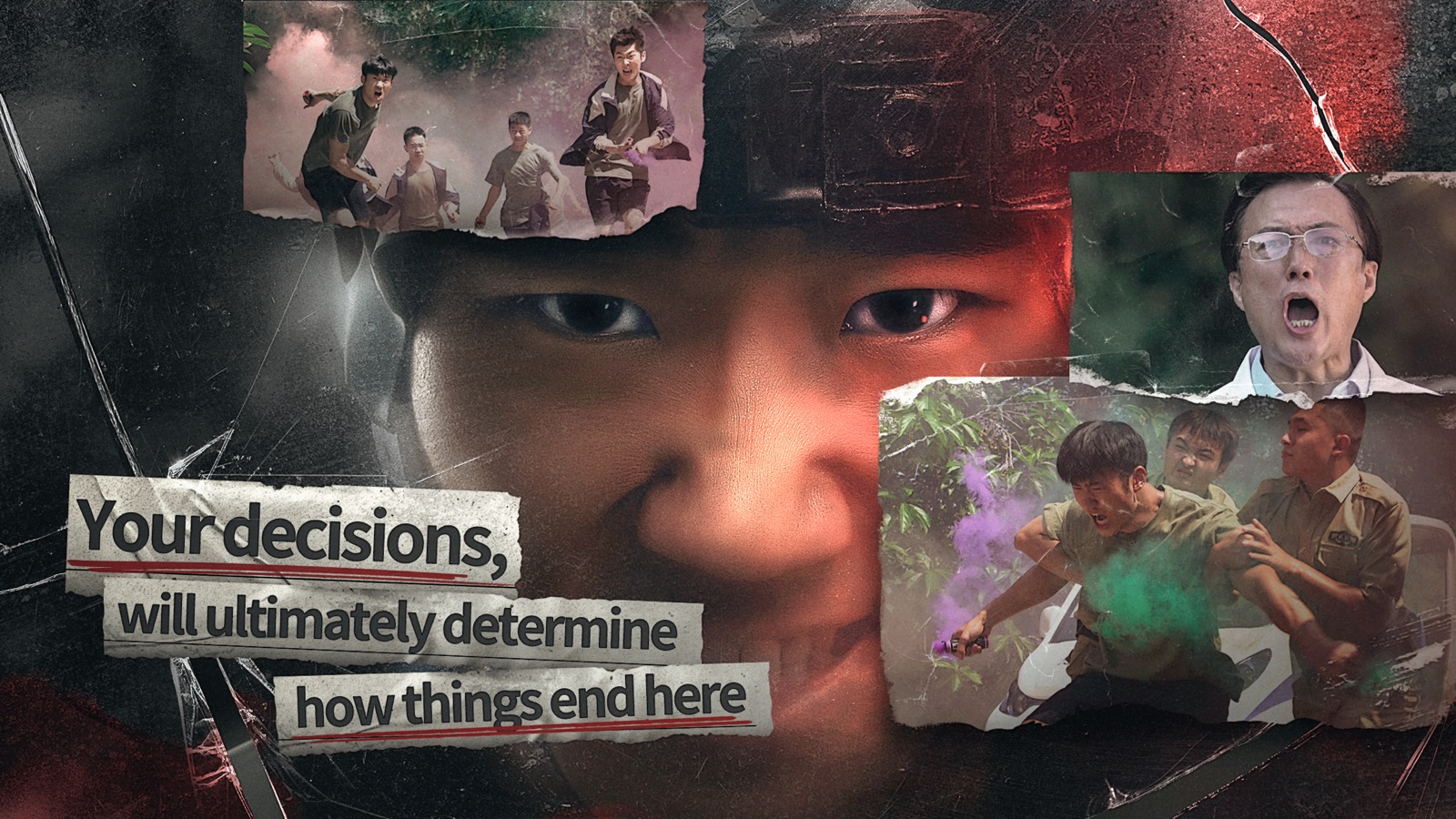 Breakout 13: a social drama filmed as a branching feature, and selected at Cannes Next.
The controversy dividend
Revenge on Gold Diggers also demonstrated something uncomfortable and important: in this genre, cultural friction is reach. Its original Chinese title sparked a national debate about gender framing intense enough that the domestic name was changed, while the English title stayed. The story was covered from Beijing to London, and every article minted new players. The lesson isn’t that controversy should be courted; it’s that this format, live actors, contemporary anxieties, choices with moral weight, generates conversation in a way no pixel-art indie ever will. These are films about now, and audiences argue about them the way they argue about television.
The part the West hasn’t processed
All of this happened with almost no English-language press, no Western marketing push, and communities organizing themselves through guides and route-sharing threads. Now the wave is reaching the platform where it makes the most sense: the phone, the same screen where short dramas already own hundreds of millions of daily viewing hours, and where a choice prompt is a thumb-tap rather than a controller reach.
Break 13 Out is already free-to-start on iPhone; Revenge on Gold Diggers is on the way. The last time a national production wave translated this cleanly onto a new screen, it was Korean drama hitting streaming, and it rewrote the global market.
This one is playable. We’ll be covering it as a standing beat, releases, ports, the studios and the people behind them, in News and on the mobile hub.