The canon · EXT. SIXTY YEARS — DAY
Sixty years of
films that fight back
Eight eras, one idea: an audience that chooses. From a Czech provocation at Expo 67 to an industry being rebuilt in Shanghai — the full lineage of interactive film.
-
01
1969–1985
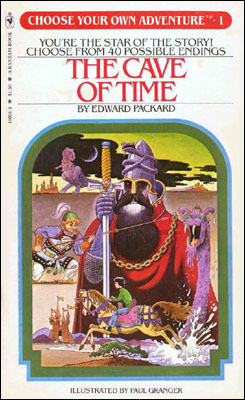
Print origins
Edward Packard invents the form telling bedtime stories to his daughters; Bantam's Choose Your Own Adventure series launches in 1979 with The Cave of Time and sells over 250 million copies — one of the best-selling children's series ever printed. Written in second person, «YOU are the hero»: the exact grammatical trick interactive film will spend the next forty years trying to reproduce on screen. Fighting Fantasy (Steve Jackson & Ian Livingstone, 1982) adds dice and sells 20 million more.
-
02
1967
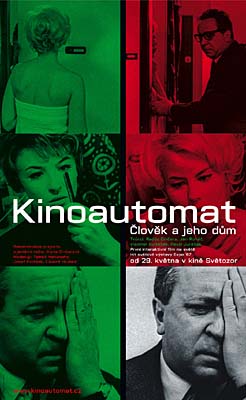
Kinoautomat
The world's first interactive film premieres at Expo 67 in Montreal: Radúz Činčera's One Man and His House. At nine decision points, a live moderator stops the projection and 127 seats vote with red and green buttons. The secret joke — every branch converges on the same ending — was Činčera's satire of democracy. A sensation at the Expo; banned at home by the Czechoslovak regime shortly after; shelved for decades.
-
03
1983–1984
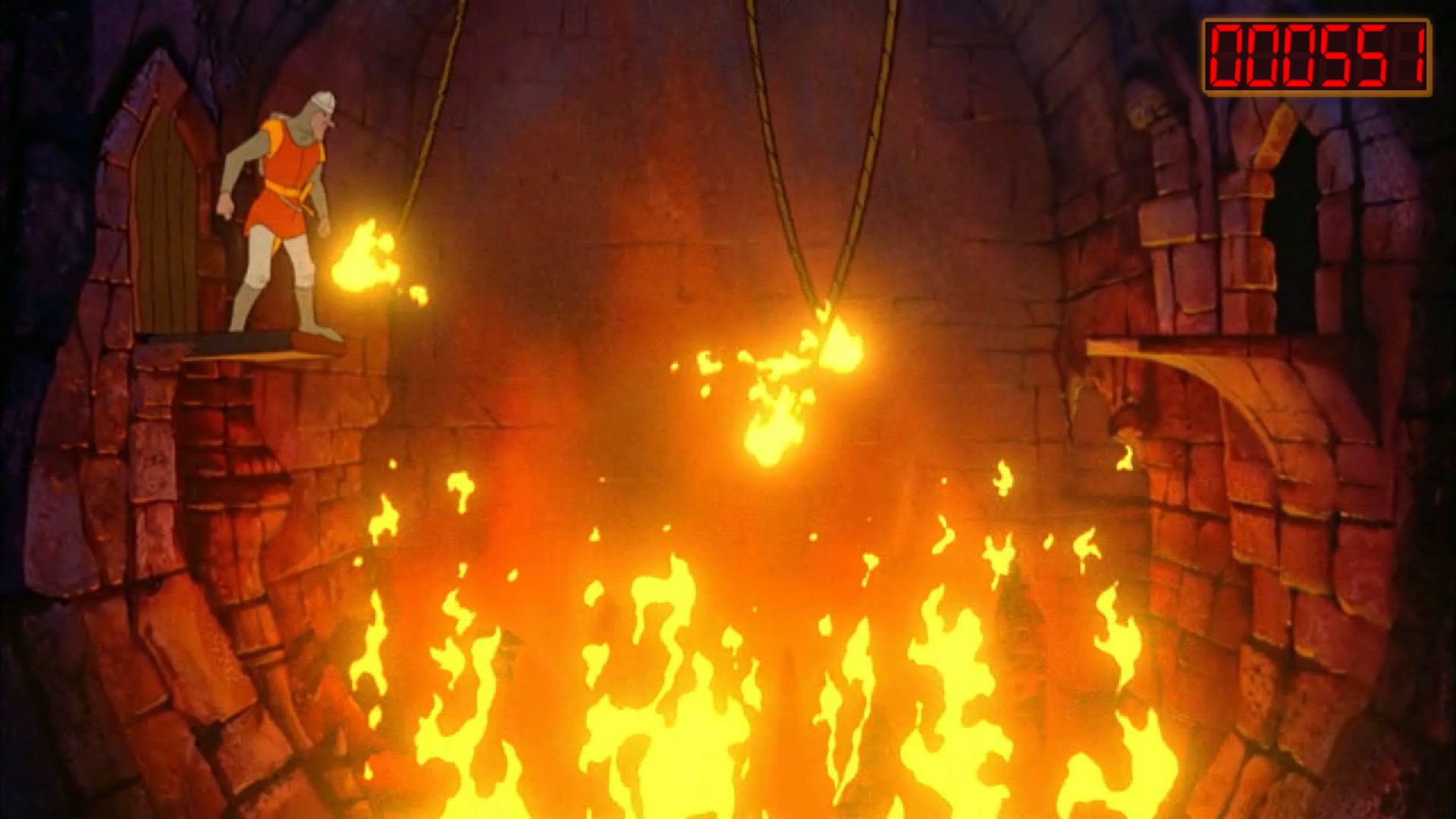
Laserdisc arcade
Dragon's Lair streams ex-Disney animator Don Bluth's full cel animation from laserdisc — and charges 50 cents a play when the whole industry runs on quarters. You never control Dirk directly; you pick a direction at branch moments, and every wrong input is its own gorgeous death scene. It grosses tens of millions in the middle of the 1983 arcade crash and ends up in the Smithsonian's permanent collection alongside Pong and Pac-Man.
-
04
1992–1996
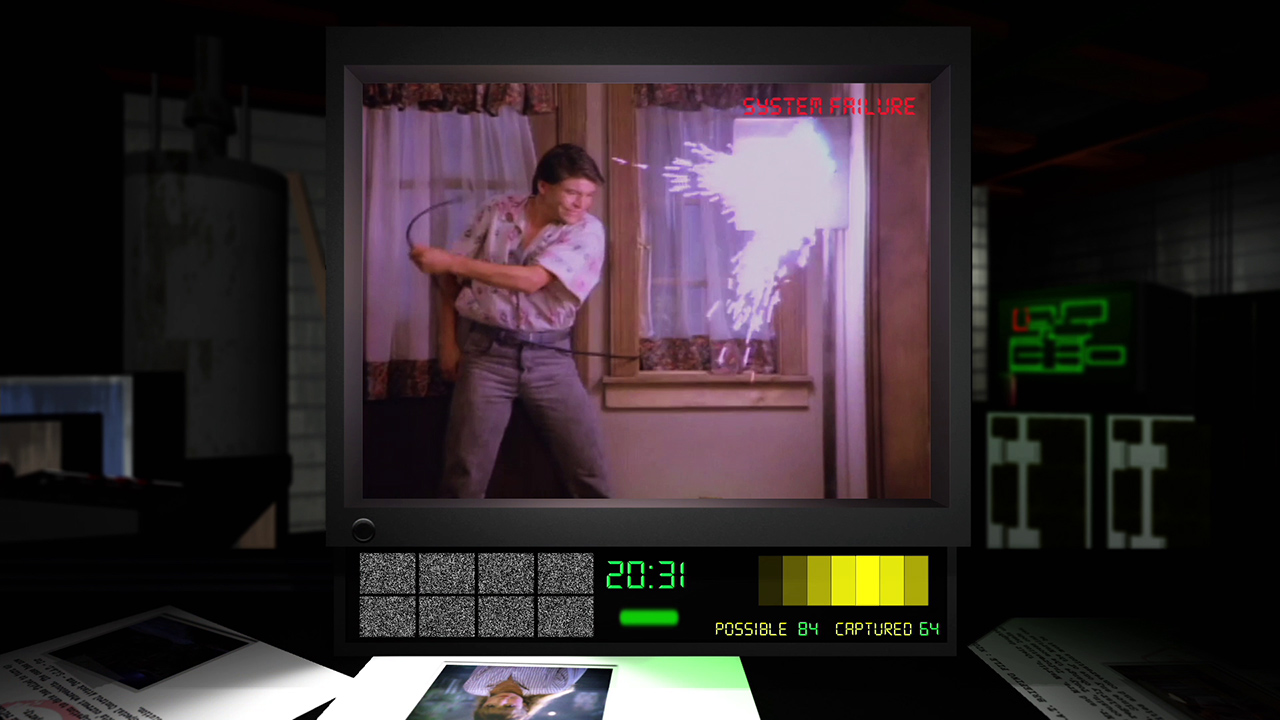
The CD-ROM gold rush and crash
Hollywood ambition hits the CD-ROM: Night Trap becomes the star exhibit of the 1993 US Senate hearings that create the ESRB. Roberta Williams' Phantasmagoria ships on seven discs with a 550-page script and 200-person crew and still becomes Sierra's best-seller of 1995. Tex Murphy's Under a Killing Moon bills itself «the first interactive movie». Then budgets, taste and 3D graphics end the era almost overnight — and FMV becomes a punchline for twenty years.
-
05
2012–2018
The Telltale bridge
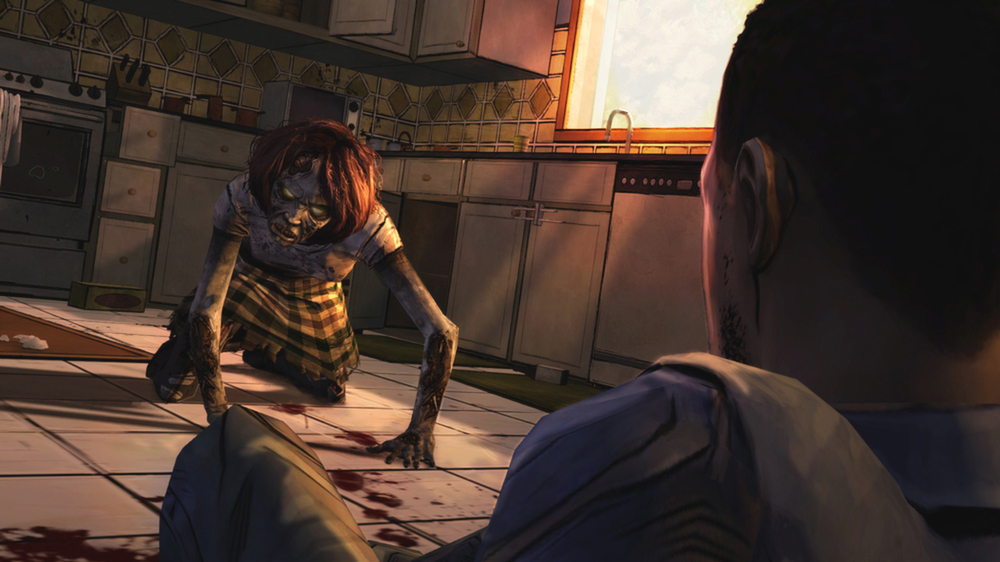
FMV lies dormant, but Telltale's The Walking Dead (2012) keeps choice-driven cinematic drama alive in animation — 28 million episodes sold, ninety Game of the Year awards, and «Clementine will remember that» turning private decisions into shared social currency. Telltale's abrupt 2018 collapse becomes the cautionary tale of scaling interactive film like a TV studio; its veterans scatter, and some of them will found AdHoc.
-
A fan-charted map of every Bandersnatch path (CC BY-SA 4.0)
06
2015–2022
The revival
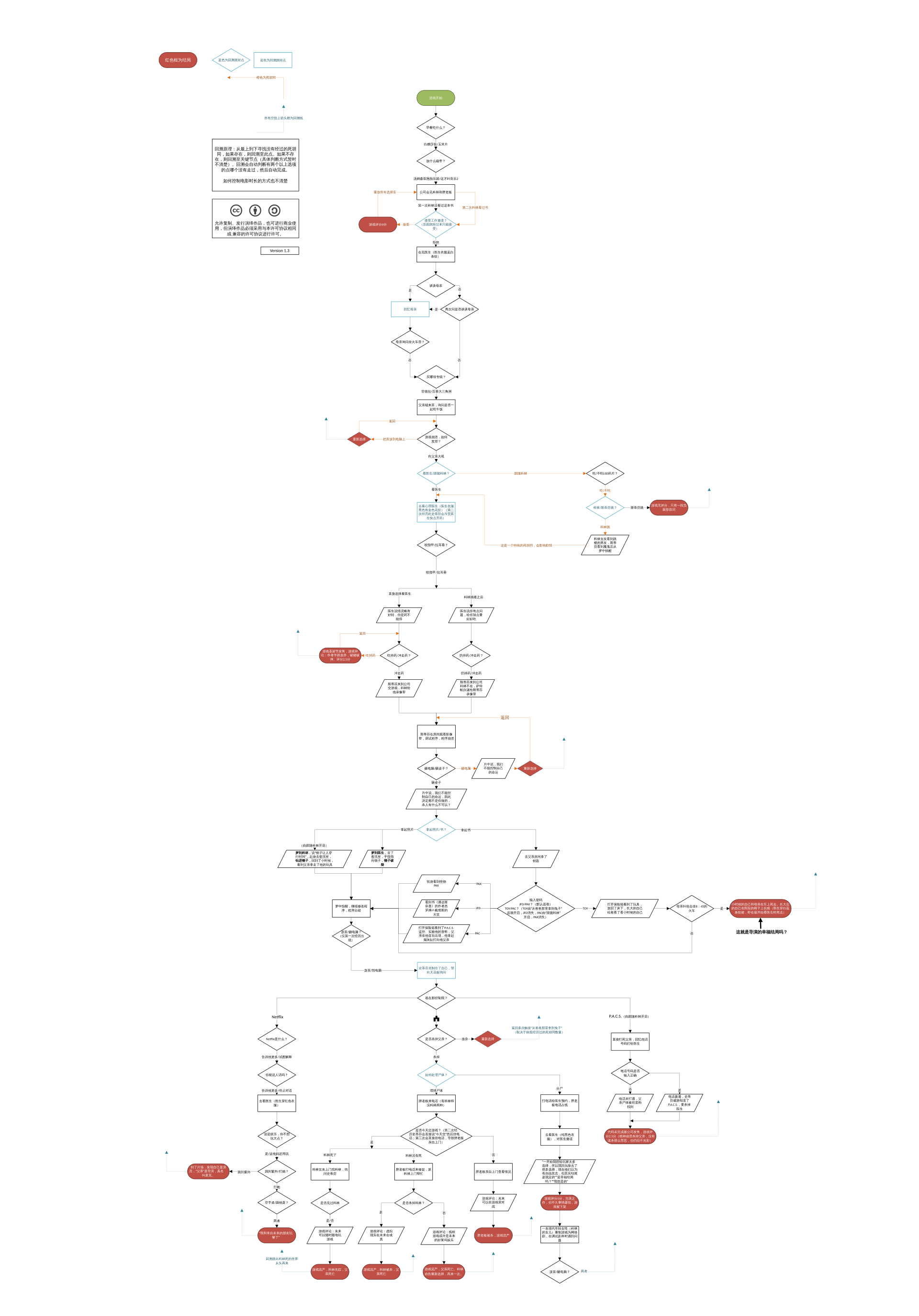
Her Story — one designer, one actress, seven shooting days — wins the IGF Grand Prize and reinvents FMV as a database you interrogate. Late Shift shoots a real feature with 180+ decision points and screens in cinemas where audiences vote by smartphone: Kinoautomat's premise, fifty years later. Bandersnatch puts a branching engine inside Netflix and five hours of footage behind a 90-minute film. The form is respectable again — then Netflix quietly deletes its interactive catalogue at the end of 2024, and the lane stands empty.
-

07
2023–now
The Chinese wave
Love Is All Around tops China's Steam charts in late 2023 and proves the market the West wrote off. Breakout 13 turns a documented social scandal into interactive film as exposé — Cannes Next 2023, two NYX Awards. Then Revenge on Gold Diggers hits #1 on Steam's global top sellers within a day of launch in June 2025, ignites a national debate, and ships the largest branching structure ever produced: 472 minutes, 38 endings. The short-drama industry's production machine has found its premium format — and it's heading for the phone.
▸ Read the beat -
Refik Anadol, Unsupervised, MoMA (CC BY-SA 4.0)
08
Next
The AI era
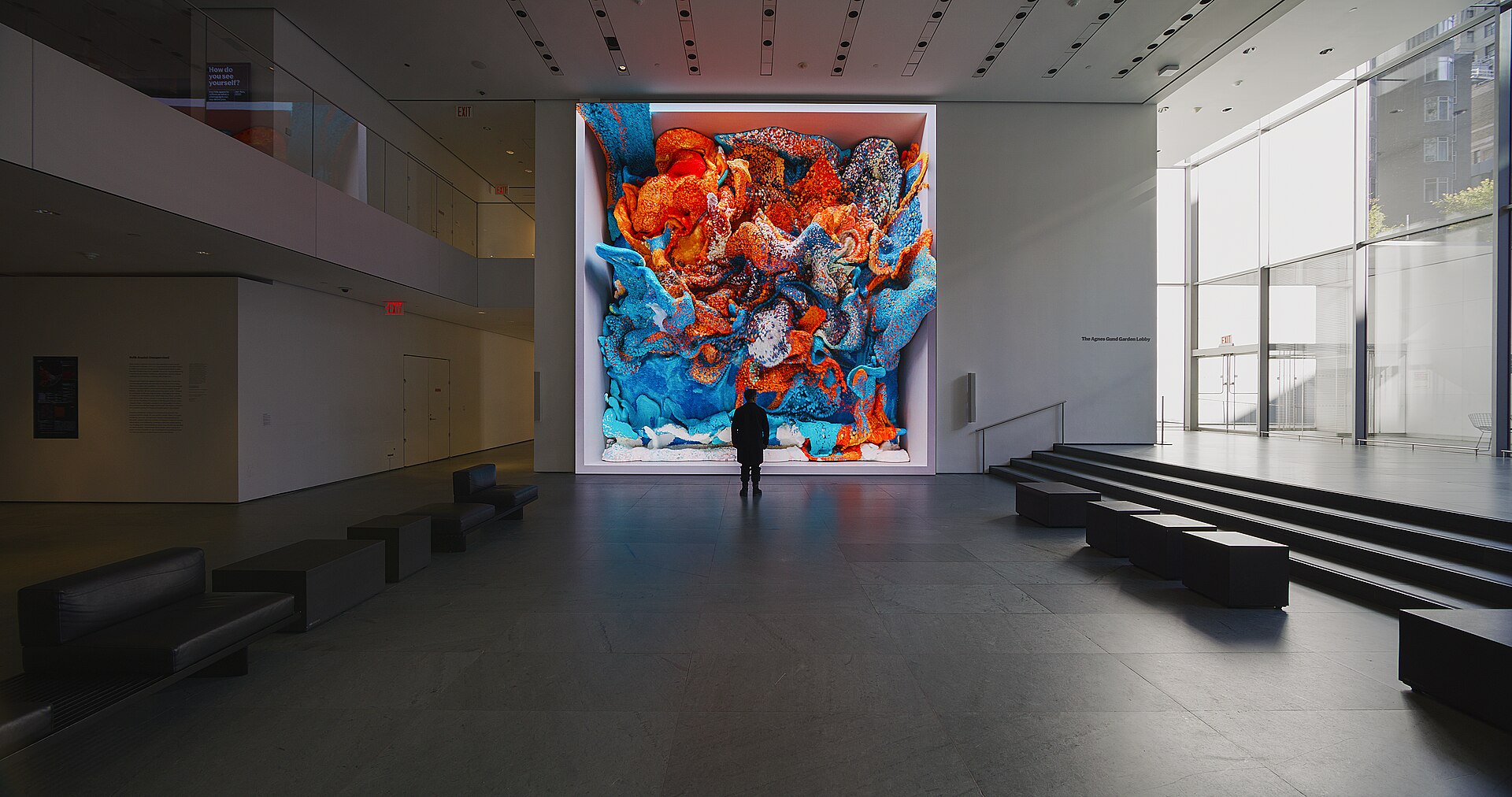
Every era on this page pre-shot its branches: nine for Kinoautomat, about 150 scenes for Bandersnatch, 472 minutes for Revenge on Gold Diggers. Generative models invert the constraint — footage that is rendered rather than retrieved makes the branch count effectively unbounded. The most interesting era of interactive film is the one starting now, and it's the standing beat of our AI vertical.
▸ Read the beat
Image credits: game imagery © their studios (Steam press assets) · Kinoautomat poster & book covers via Wikipedia · Bandersnatch path map & Refik Anadol installation photos CC BY-SA 4.0, Wikimedia Commons